Waukegan Epoxy Flooring installs metallic epoxy floors in Waukegan, IL, serving surrounding cities including Park City, Gurnee, North Chicago, Beach Park and Green Oaks. A metallic floor is the most decorative system we put down, a marbled, three-dimensional finish worked by hand into the wet resin. It is also the least forgiving of a poor slab, which is why our more than 20 years of grinding and testing concrete matter more on this floor than on any other.
Every metallic floor we install starts the same way as our plainest garage coating: a diamond-ground surface, crack and patch repair, and a moisture test written into the scope. The difference is that a metallic floor needs that work done more carefully, because the finish shows every high spot, low spot and shadow underneath it.
Our proposal names the primer, the metallic system, the topcoat and the finished thickness, along with the colors and movement style you have picked. You get a one-of-a-kind floor without any doubt about what was installed under it.
How a Metallic Epoxy Floor Is Built
Grinding and Leveling the Slab
Metallic resin flows into low spots and thins over high ones, which changes how the pigment settles. We diamond grind the whole slab, fill cracks and patches, and skim out low areas so the surface is as flat as practical before any color goes down. This step takes longer than on a flake floor, and it should.
Primer and Tinted Base
A primer coat seals the ground concrete and stops air from rising out of the slab into the metallic layer, which would leave pinholes. A tinted base coat follows, setting the background color that shows through the metallic pigments.
The Metallic Layer
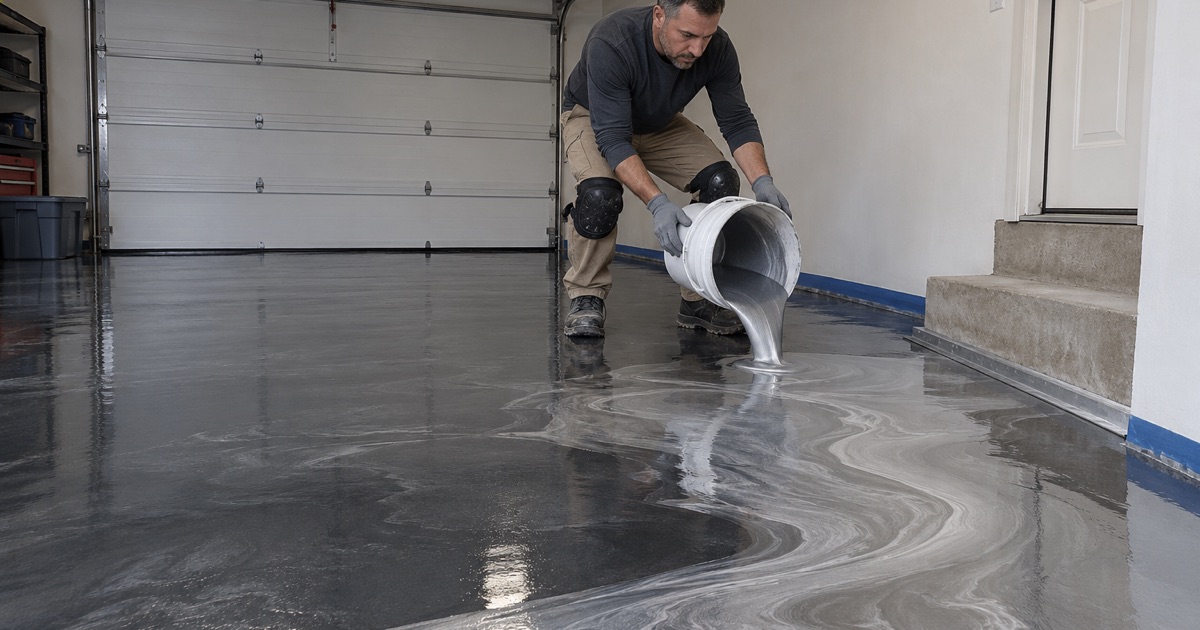
The metallic coat is a 100% solids epoxy carrying pearlescent pigments. While it is wet, the crew moves it with rollers, trowels, brushes and sometimes solvent sprays to create veining, swirls, cells or a smooth lava look. Timing is everything: the effect has to be finished before the resin sets.
Protective Topcoat
A clear aliphatic topcoat, usually polyaspartic or urethane, goes on last. It protects the metallic layer from scratches, resists yellowing in sunlight and can carry an anti-slip additive. It is also the layer that wears and can be renewed later.
Metallic Floors for Homes
Basements and Finished Rooms
In a finished basement, a metallic floor gives the look of polished stone over concrete that was formerly plain. Because a basement slab is the most likely place in a house for moisture problems, we test it carefully and use a moisture-mitigation primer where the readings call for one.
An older Waukegan basement with layers of paint and adhesive will need all of it ground away first. The metallic finish needs clean, sound concrete under it to look right.
Garages and Showpiece Shops
A metallic garage floor is a showpiece for a car collection or a home shop. It needs the same salt resistance as any Lake County garage, so the topcoat is built to shed calcium chloride brine and resist hot tire pickup. Expect more cleaning than a flake floor in winter, because a glossy finish shows salt film quickly.
Metallic Floors for Businesses
Showrooms and Retail Spaces
A metallic floor turns a showroom or boutique into part of the display. It reflects light, works with a brand color and gives a seamless surface that is easy to clean. We schedule installation outside business hours, because each coat needs uninterrupted time to cure.
Bars, Restaurants Front-of-House and Salons
In a bar, a dining room or a salon, metallic epoxy gives a durable, distinctive floor that wipes clean. Wet areas get an anti-slip topcoat, and we choose products within the Illinois limits on VOC content for floor coatings, which bind the installer as well as the manufacturer.
Choosing Colors and Movement
Color Combinations and Pigment Depth
Most metallic floors use a base color and one or two accent pigments. Contrasting combinations, such as charcoal with silver, read bold and dramatic; tone-on-tone, such as copper over bronze, reads softer. We bring samples so you can see them in your own light.
Movement Styles
Veined floors look like marble, cell patterns look like lunar surfaces, and gentle swirls look like flowing water. Each depends on technique and timing. We agree on the style before install day and show you a test board where it helps.
Gloss Versus Satin Topcoats
High gloss shows the most depth in the metallic layer but also shows dust and scratches. Satin softens both. On a busy floor, satin is often the better long-term choice, while a high gloss suits a low-traffic showpiece room.
Caring for a Metallic Floor
Routine Cleaning
Dust mop or sweep to keep grit off the surface, and wash with a pH-neutral cleaner. Avoid abrasive pads that leave swirl marks in a gloss topcoat. Felt pads under furniture legs prevent scratching.
Refreshing the Topcoat
When the topcoat dulls in traffic paths, it can be lightly abraded and recoated without touching the metallic layer. That restores depth and protection at a fraction of the original cost, and it is how a metallic floor stays looking new for years.
Why Metallic Floors Fail, and How We Prevent It
Pinholes and Outgassing
Concrete is full of tiny air pockets, and as a slab warms during the day, that air expands and rises. If it rises into a wet metallic coat, it leaves pinholes and craters that cannot be hidden. A proper primer coat seals the surface first, and we schedule the metallic layer for when the slab temperature is steady or falling rather than climbing.
Amine Blush and Cloudy Finishes
When epoxy cures in cool, humid air, a waxy film called amine blush can form on the surface. On a metallic floor, it dulls the depth of the pigment and weakens the bond of the next coat. We watch the dew point spread at the slab surface through every coat, and we clean off any blush before the topcoat goes down.
Moisture Lifting the Coating
A metallic floor is a continuous film, and vapor coming up through the slab collects under it as blisters. That is why every metallic job includes a moisture test, and why the warranty exclusions, with moisture first, are read out before the job is sold. A slab that tests high gets a mitigation primer or a frank conversation about waiting.
Shadows From Repairs and Patches
A crack filler or a patch can absorb resin at a different rate from the concrete around it and show as a shadow under a translucent metallic coat. Our tinted base coat evens out the background so repairs disappear, and we grind patches flush so the metallic layer flows over them at an even thickness.
Planning Your Metallic Floor Project
Clearing the Room and Access
A metallic floor needs an empty room and uninterrupted access for the crew across several days. Furniture, shelving and appliances must come out, and doors to the rest of the house stay closed while each coat cures. We give you a day-by-day schedule so you know when the room can be used again.
Rentals, Condos and Shared Buildings
In a rental or a shared building, a metallic floor is planned with the owner and around the neighbors who share hallways or ventilation. Every home job, rented or owned, gets a written contract and the state’s consumer-rights pamphlet before work starts, as the Illinois Home Repair and Remodeling Act requires.
- 20+ Years Coating Floors
- Moisture Testing in Every Scope
- Free Written Estimates