How an Epoxy Garage Floor Job Runs
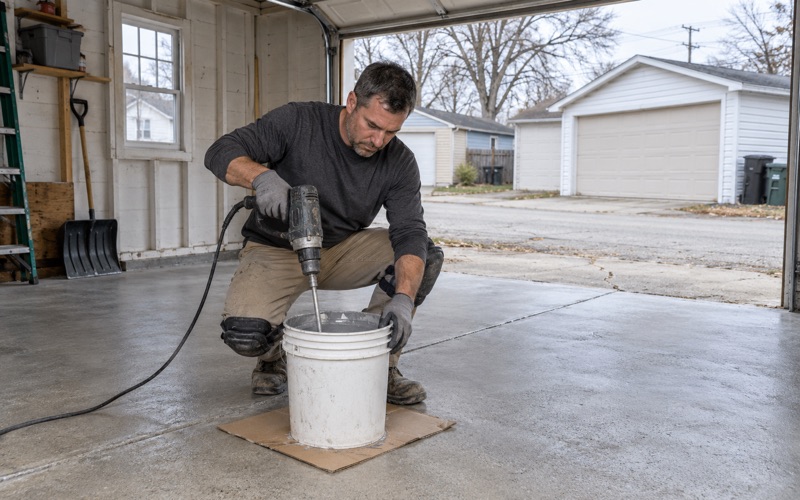
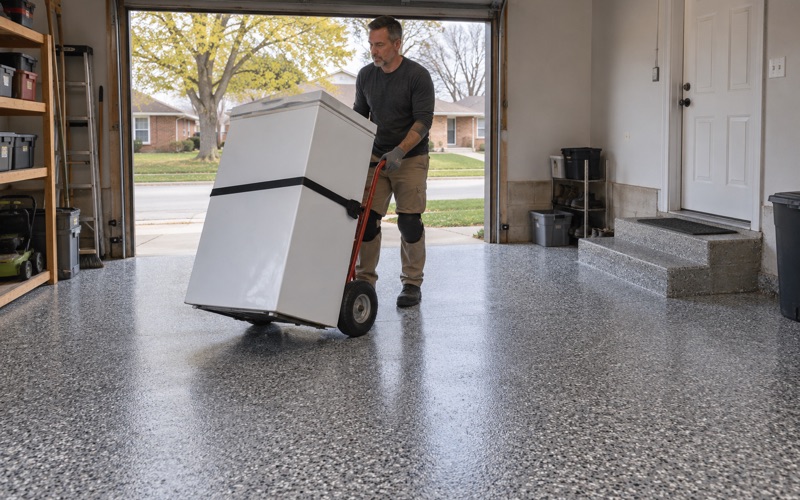
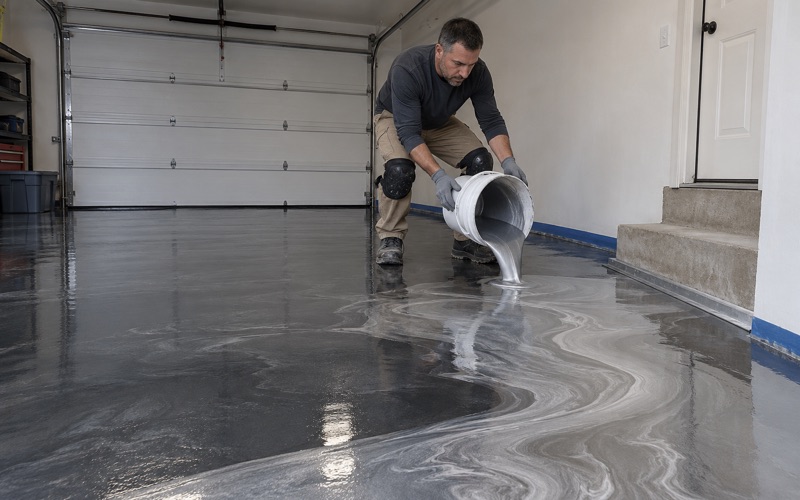
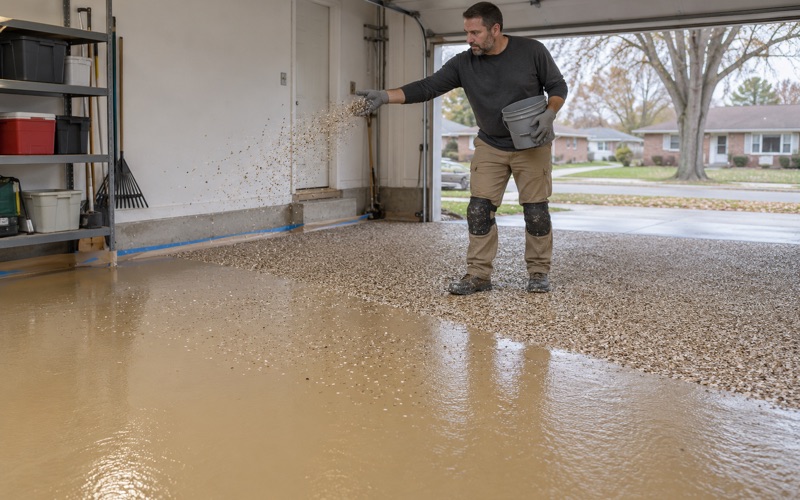
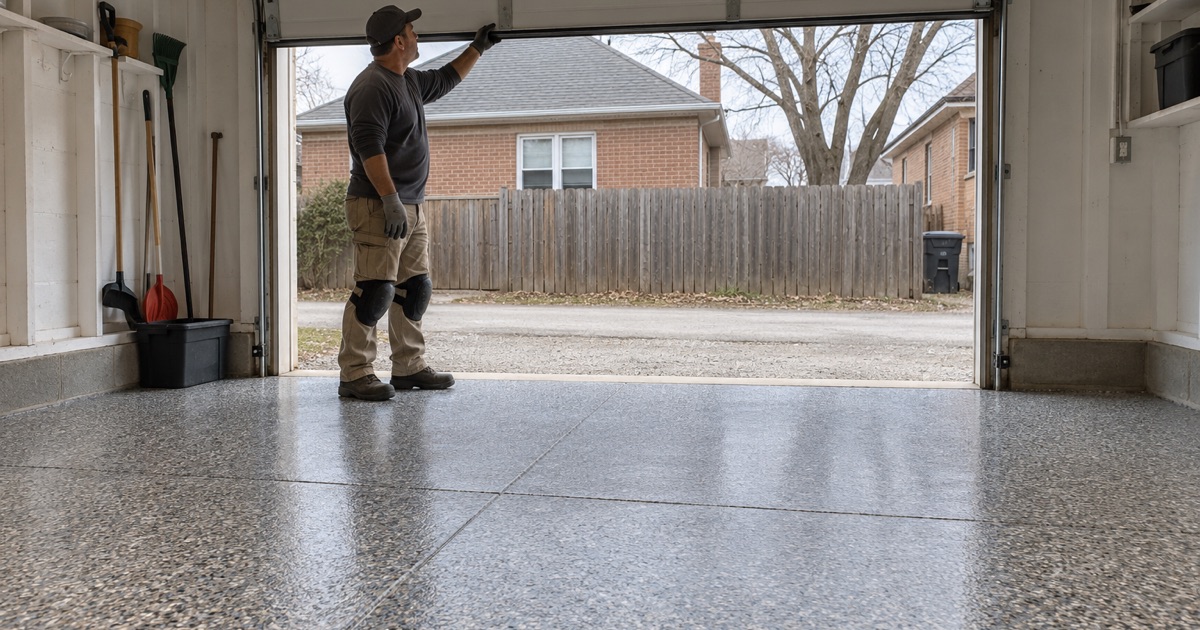
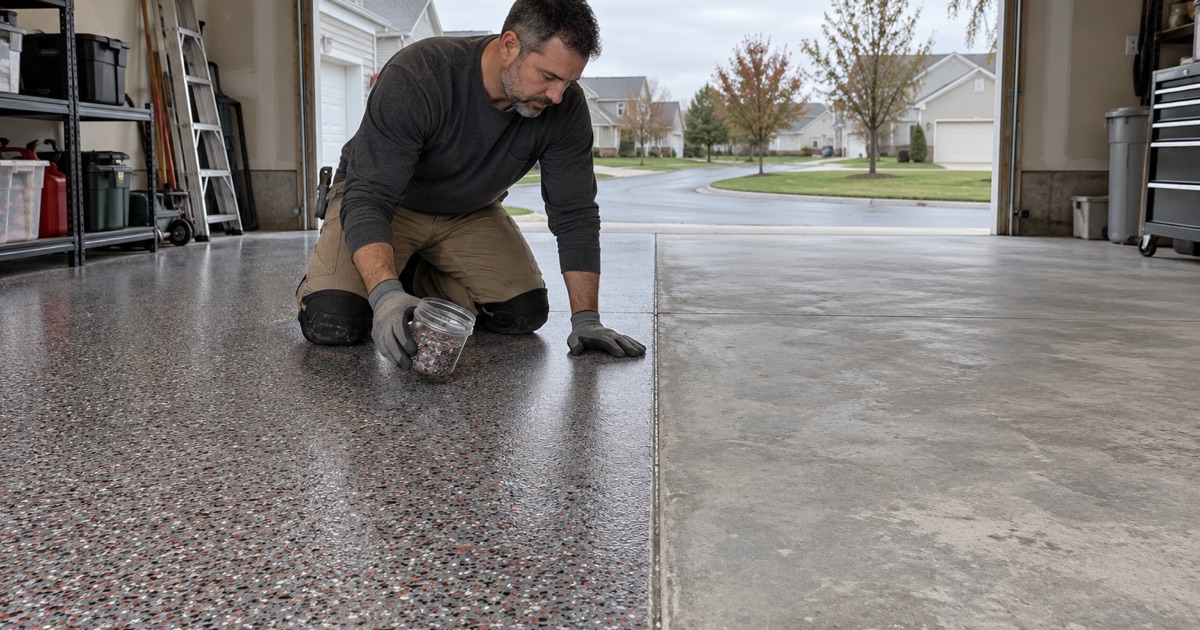
An epoxy garage floor starts with a look at the slab: cracks, old coatings, drains, and how the floor slopes toward the door. Then come grinding, repairs, a base coat, a broadcast or color layer and a wear-resistant topcoat. Most two-car garages are back in use within a few days, with vehicles waiting on the topcoat’s full cure.
Diamond Grinding Before Any Garage Coating
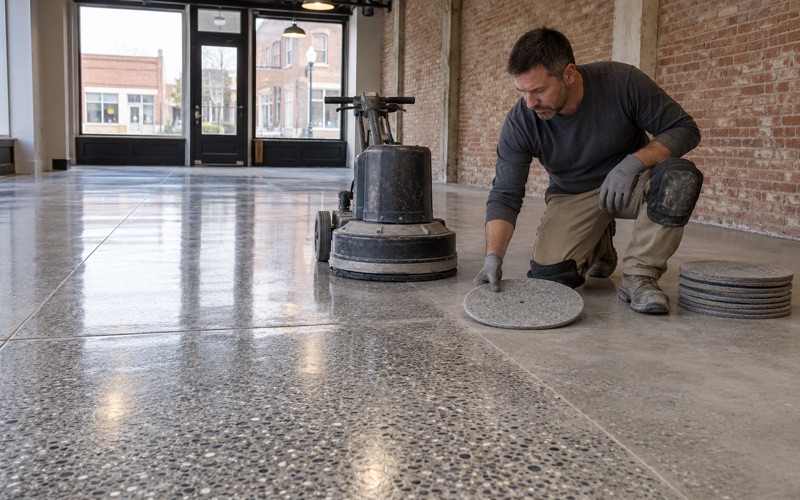
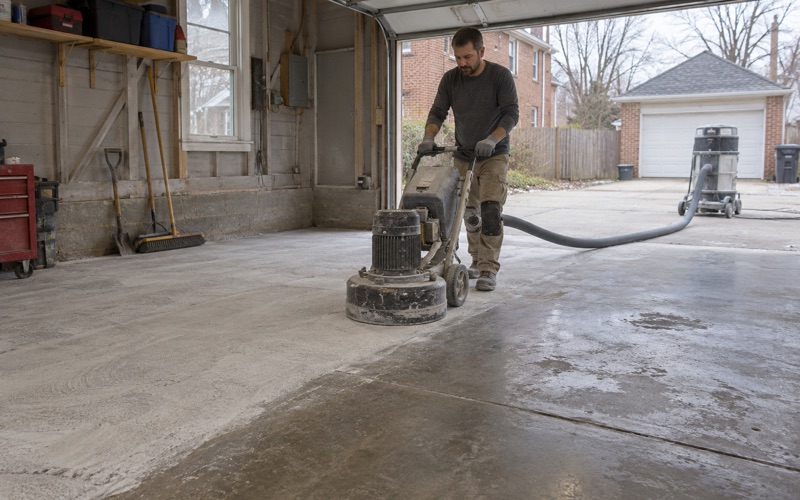
A coating over sealed or painted concrete is bonded to the sealer, not the slab, and it lets go the first time that weaker layer does. We diamond grind every garage floor to an ICRI CSP profile the system calls for, which removes sealers, oil-stained paste and loose surface. The grinding is what makes the bond, so it is never the step we trim.
Moisture Testing a Garage Slab
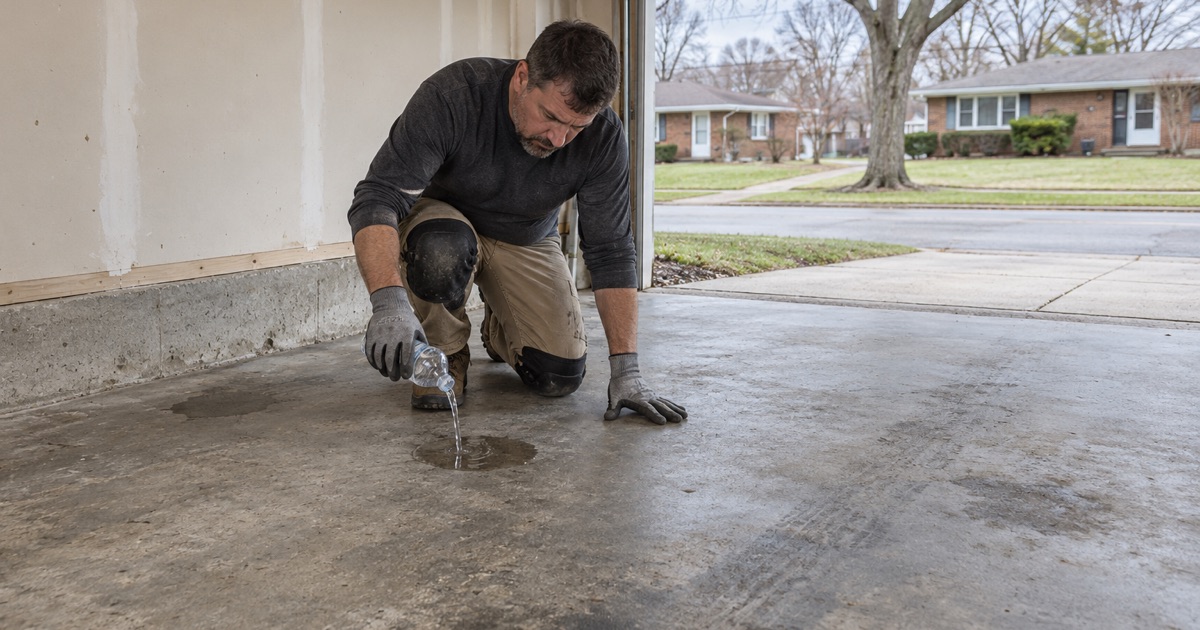
The 2021 International Residential Code lets a garage slab go in without a vapor retarder under it, through the exception in IRC R506.2.3, and plenty of older garages were poured long before anyone asked. We run an ASTM D4263 plastic sheet test as a first read and calcium chloride or relative humidity testing where the slab warrants it. A garage that is dry in August can push vapor in April.
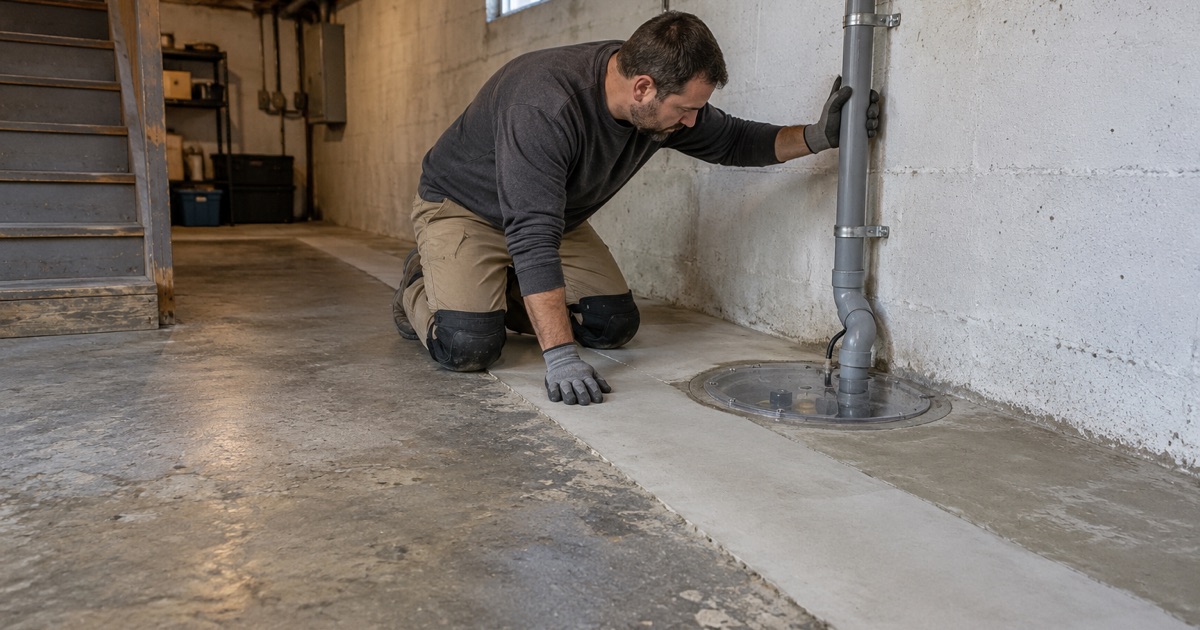
Garage Floor Cracks and Failed Slabs
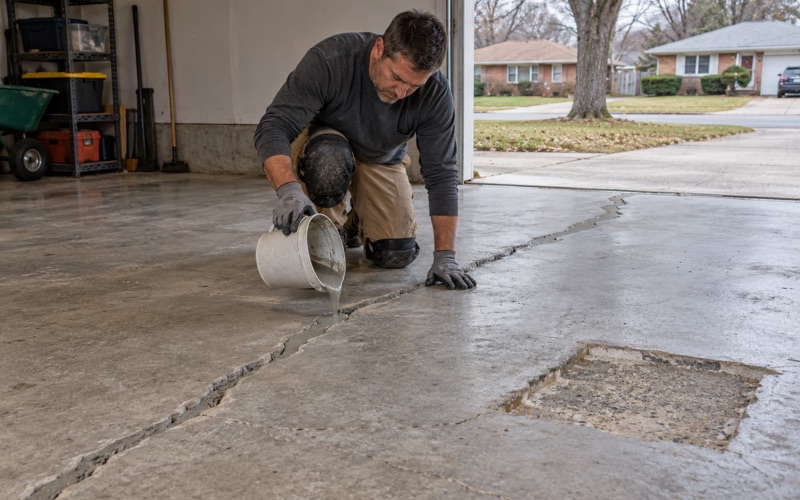
Hairline shrinkage cracks can be routed and filled before coating. A crack with one side higher than the other, or a slab that has heaved or sunk at the apron, is moving, and a coating will simply follow it. We tell you which kind you have, and when the honest answer is slab replacement first.
Calcium Chloride Brine on Bare Concrete
Rock salt and calcium chloride deicers dissolve into brine that soaks into bare concrete, then freezes and expands inside it. Over a few winters that scales the surface and pops aggregate loose. A sealed, continuous coating keeps the brine on top, where a squeegee or a hose can move it out the door.
Coating a Garage in a Lake County Winter
Epoxy and polyaspartic both have a minimum slab temperature, and a garage that sits near freezing for weeks is below it. Coating a cold slab risks amine blush, a soft cure and a weak bond. We can work in a heated garage in winter, but an unheated one usually goes on the calendar for spring.
Hot Tire Pickup on Garage Coatings
A tire coming off a highway is hot and softens slightly, and on a thin or poorly cured coating it grips the film and pulls it up when the car moves. That is hot tire pickup, and it is the classic failure of thin one-part paints. A properly ground floor with a full-build epoxy base and a polyaspartic topcoat resists it.
DIY Epoxy Kits Versus a Professional Floor
A store kit is a thin, water-based epoxy over an acid-etched floor, usually put down by hand with a roller in an afternoon. A professional floor uses 100% solids epoxy or polyaspartic, laid over a ground surface at a measured thickness. The difference shows up as peeling under tires in the first year.
What an Epoxy Garage Floor Costs
Price follows the square footage, the condition of the slab and the system you choose. Crack and spall repair, removing an old coating, moisture mitigation and a full flake broadcast all move the number. We break each of those out as its own line, so two quotes can be compared item by item.
Rental Garages and Two-Flat Floors
About half of Waukegan’s occupied homes are rented, and many sit in two-flats and small buildings with shared garages. We schedule those floors with the owner and around the tenants who still need to park, and we plan the cure so the garage is not out of service longer than the system requires.
What a Coating Warranty Excludes
Almost every floor coating warranty excludes failure caused by moisture coming up through the slab, and that exclusion is the one that matters most on an older floor. Others commonly exclude slab movement, chemical spills and damage from dragged equipment. We read the exclusions out before the job is sold, so nothing in them is a surprise.